
India's finance ministry anticipates inflation will remain relatively contained in the coming months, supported by a correction in crude oil prices and softening input costs following the cessation of the West Asia conflict, despite earlier spikes in wholesale and retail inflation.

Iran has reimposed restrictions on the Strait of Hormuz, with its forces opening fire on a passing tanker and forcing at least two Indian vessels to reverse course, escalating tensions in the region and raising concerns over energy supplies.

US Secretary of State Marco Rubio on Tuesday said the United States would prefer to end its extension of waivers on Russian oil "as soon as possible", while noting that such decisions ultimately rest with the US Treasury Department.

'The West Asia or the Gulf crisis has shown that what we develop as national infrastructure when things are not as bad as they could be, we forget to plan for adversities.'

The World Bank has increased India's economic growth projection for FY27 to 6.6 per cent, citing resilient domestic demand, while simultaneously cutting its global economic growth outlook due to the conflict in West Asia.

A recently finalised peace deal between the US and Iran, set to be signed on June 19, is expected to significantly benefit India's economy by boosting exports to West Asia, stabilising the rupee, and easing inflationary pressures, according to exporters and experts.

US President Donald Trump has announced plans to clear the Strait of Hormuz to secure the vital oil corridor, citing risks to global energy supplies and criticising other nations' inaction.

US President Donald Trump will visit China from May 13 to 15 at the invitation of President Xi Jinping. The visit occurs amidst global tensions, including the war in West Asia and trade disputes between the US and China. Discussions are expected to cover China-US relations, world peace, and economic issues.

India restricts subsidised LPG connections for households with piped natural gas (PNG) to ensure equitable distribution and address global energy supply concerns, pushing for faster PNG adoption.

The Asian Development Bank (ADB) has revised down India's GDP growth forecast for fiscal year 2026-27 (FY27) to 6.6 per cent from an earlier 6.9 per cent, primarily attributing the change to elevated energy prices stemming from the Middle East conflict. Despite this moderation, India is still expected to remain the world's fastest-growing major economy.

Prime Minister Narendra Modi and Indonesian President Prabowo Subianto have significantly advanced the India-Indonesia Comprehensive Strategic Partnership, securing crucial agreements on defence, critical minerals, and maritime security, including BrahMos missile supply and Sabang port development.

India possesses two months of fuel stockpiles and faces no supply concerns despite global energy disruptions, according to Oil Minister Hardeep Singh Puri. However, state-run fuel retailers are incurring losses of up to Rs 1 lakh crore in a single quarter due to elevated crude prices and unchanged retail fuel prices, raising questions about the sustainability of these losses.

BJP MP Janardan Mishra has strongly defended the Centre's ethanol blending policy amidst ongoing controversy, highlighting India's high crude oil import dependency and global geopolitical challenges. He questioned opponents of ethanol blending, citing Brazil's successful use of 100 per cent ethanol in vehicles and experts' views on its engine compatibility.

India significantly increased its crude oil imports from Russia and the United Arab Emirates in June, securing supplies as the Strait of Hormuz began to reopen, with Russian barrels remaining attractive due to discounts and UAE supplies offsetting earlier uncertainties.

Mahindra Group CEO Anish Shah emphasizes the critical role of Artificial Intelligence, advocating for its meaningful integration at scale across all aspects of the company. He highlights that AI is redefining industries and decision-making, urging a proactive approach to leverage its potential. Shah also addresses global uncertainties, stating the group's commitment to accelerate amidst challenges and aim for global leadership.

India's economy is projected to maintain growth above 7 per cent in 2026-27 (FY27), supported by strong domestic consumption and investment, even as global growth faces risks from geopolitical tensions, according to industry body Assocham.

India's procurement of Venezuelan crude oil has picked up momentum since April and the South American nation has already emerged as the third largest oil supplier to the country.

S&P Global Ratings warns that a sustained rise in crude oil prices to $130 per barrel could significantly slow India's economic growth, weaken fiscal metrics, and strain corporate and banking sector performance, potentially reducing growth by up to 80 basis points.

Analysts predict that the ongoing US-Iran conflict, fluctuations in crude oil prices, and foreign institutional investor (FII) flows will be the primary factors influencing Dalal Street this week, with inflation concerns adding to investor anxiety.

Indian benchmark indices Sensex and Nifty traded lower amid volatile trends, influenced by escalating geopolitical uncertainties in West Asia and fresh outflows from Foreign Institutional Investors (FIIs).

National Security Advisor Ajit Doval called for decisive action against terrorism and said there cannot be 'double standards' in the fight against it, while addressing an international security forum in Russia.

Moody's Ratings has reduced India's GDP growth forecast for 2026 to 6 per cent, citing subdued private consumption, capital formation, and industrial activity due to higher energy costs and global uncertainties.

One Indian oil tanker successfully crossed the Strait of Hormuz, while others turned back after Iran signalled the waterway's closure, amidst rising tensions and disruptions to global energy flows.

US President Donald Trump is considering ending the military operation against Iran even if the Strait of Hormuz remains closed, according to the Wall Street Journal.
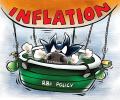
The Reserve Bank of India has increased its retail inflation projection for 2026-27 to 5.1 per cent, up from an earlier estimate of 4.6 per cent. This revision is primarily attributed to mounting input costs, driven by the pass-through of higher global energy prices to domestic petrol and diesel rates, which have seen significant increases since May.

Global oil prices fell on Thursday to their lowest levels since before the outbreak of the Iran conflict, offering a significant economic tailwind for India, the world's third-largest crude importer, by easing inflation risks, reducing the import bill and improving the government's fiscal position.

India has expressed firm opposition to attacks on merchant shipping amidst the ongoing Iran conflict, revealing that several Indian nationals have died or are missing due to these incidents. The nation also called for restraint, de-escalation, and prioritising civilian safety in the region.

According to the Pentagon, the vessels were targeted as part of efforts to prevent the deployment of naval mines in the strategically vital passage through which a significant portion of global crude oil shipments transits.

External Affairs Minister S Jaishankar has strongly defended India's decision to purchase Russian crude oil, stating that the country's energy choices are based on cost and availability, and highlighting the West's 'hypocrisy' in criticising India while historically supplying weapons used against it.
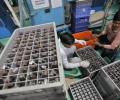
Escalating geopolitical tensions in West Asia are beginning to disrupt India's automotive supply chain, leading to rising commodity prices, logistics bottlenecks, material shortages, and pressure on consumer demand, with two-wheeler makers already raising prices.

India's fresh investment plans in Q1FY27 surged 71 per cent to 14.77 trillion, primarily driven by four large nuclear power projects worth 6.5 trillion, according to investment monitoring firm Projects Today. Excluding these nuclear projects, fresh investment plans actually declined 4.27 per cent quarter-on-quarter.
External Affairs Minister S Jaishankar has emphasised India's commitment to safe maritime transit and condemned attacks on merchant shipping amidst the ongoing West Asia conflict and global energy market disruptions.

Indian stock market benchmark indices Sensex and Nifty closed nearly one per cent higher, extending their winning streak for a second day. This rally was driven by softening crude oil prices, positive geopolitical developments, and significant buying in blue-chip IT stocks, despite a broader global tech sell-off.

The OECD projects India's GDP to grow at 7.6% in the current fiscal year and 6.1% in 2026-27, despite global economic challenges stemming from the Middle East conflict and energy price volatility.

Prime Minister Narendra Modi has begun a six-day tour of the UAE, the Netherlands, Sweden, Norway and Italy to strengthen bilateral relations amid geopolitical challenges. The trip will focus on energy security, trade, and technological cooperation.

A new study reveals that green hydrogen's potential as a sustainable fuel is contingent on the rapid decarbonisation of energy grids worldwide.
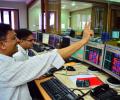
Indian benchmark indices Sensex and Nifty surged significantly in early trade, mirroring a global rally and a sharp decline in crude oil prices following the finalisation of a peace deal between the US and Iran to end their 107-day conflict and reopen the Strait of Hormuz.

A senior Russian official has stated that Russia is prepared to supply fertilisers and other agricultural products to countries in the Global South and East, following concerns about the closure of the Strait of Hormuz impacting global fertiliser exports and food security.

Indian benchmark indices Sensex and Nifty experienced a sharp decline in early trading due to escalating tensions in the Middle East, driving crude oil prices higher. Global market bearishness and foreign fund outflows further contributed to investor unease.

Indian benchmark equity indices, the BSE Sensex and NSE Nifty, experienced a significant drop in early trade due to elevated oil prices, weak global market trends, and renewed fears of military operations in the Middle East following US President Donald Trump's statements regarding Iran. Track Sensex, Nifty on May 20.
